Establishing a Robust Financial Foundation: A Primer for Foreign Entrepreneurs in Shanghai
Welcome. I am Teacher Liu from Jiaxi Tax & Financial Consulting. Over the past 12 years, I have dedicated my practice to guiding foreign-invested enterprises through the intricate landscape of Chinese corporate and financial compliance. A recurring theme in my 14 years of registration and processing experience is that while securing a business license is a celebrated milestone, the real, ongoing test of a company's operational legitimacy begins with the establishment of proper accounting books. For foreign investors setting up in Shanghai, this is not merely a back-office function; it is the very bedrock upon which sustainable operations, informed decision-making, and regulatory goodwill are built. Many enter the market with brilliant ideas and capital, only to find themselves navigating a maze of unfamiliar accounting standards, tax filing requirements, and statutory audit obligations. This article aims to demystify the process, moving beyond the basic "what" to explore the critical "how" and "why" of establishing compliant and functional accounting books from day one.
Legal Framework and Initial Setup
The journey begins with a clear understanding of the legal imperatives. According to China's Company Law and Tax Collection and Administration Law, all enterprises are obligated to establish, maintain, and preserve accounting books that truthfully reflect their business transactions. For a newly registered Wholly Foreign-Owned Enterprise (WFOE) or Joint Venture in Shanghai, this is not a suggestion but a strict requirement. The initial setup involves several foundational steps: obtaining the official company seals (including the financial seal), opening a basic bank account for capital injection, and then, crucially, completing the tax registration at the local Tax Bureau. It is at this tax registration stage that you will be assigned a dedicated tax officer and your company will be categorized under a specific taxpayer status, which directly influences your invoicing eligibility and reporting frequency. A common pitfall I've observed is entrepreneurs delaying this process, focusing solely on market entry. I recall a French client in the F&B sector who, eager to launch his bistro, postponed formal accounting setup for three months after licensing. When he finally engaged us, we faced a backlog of transactions to reconstruct and had to navigate penalties for late tax registration—a stressful and entirely avoidable situation that consumed capital and energy better spent on the business itself.
The choice of accounting software is another critical early decision. While spreadsheets might suffice for a freelancer, a corporate entity must use software approved for filing with the Chinese tax authorities, such as Golden Tax or similar systems. This software is deeply integrated with the State Administration of Taxation's online platforms, enabling direct data submission. Setting up the chart of accounts within this software requires careful thought, aligning with both Chinese Accounting Standards (CAS) and the operational reality of your business. For instance, a trading company, a consulting firm, and a manufacturing plant will have vastly different account structures. Getting this right from the outset prevents costly and time-consuming reclassification work later. We always advise clients to consider not just compliance, but also the analytical value of their books—they should be a tool for management, not just a regulatory checkbox.
Understanding Chinese Accounting Standards
For foreign investors, one of the most significant conceptual shifts involves aligning with Chinese Accounting Standards (CAS). While CAS has converged substantially with International Financial Reporting Standards (IFRS), key differences remain in areas such as asset impairment, revenue recognition for certain industries, and detailed statutory reporting formats. The principle of "substance over form" is paramount, but its application is often interpreted within a specific regulatory context. For example, the treatment of transactions with related parties requires meticulous documentation and disclosure, more so than in many Western jurisdictions. The financial statements produced—the Balance Sheet, Income Statement, and Cash Flow Statement—must adhere to prescribed templates. A nuanced understanding of these standards is essential to avoid misstatement. I worked with a German automotive parts manufacturer whose finance head, trained under IFRS, initially recorded certain R&D costs in a manner non-compliant with CAS. This led to an adjustment during their first annual audit, delaying the issuance of their audit report and causing concern among their headquarters. It was a classic case of assuming similarity where nuanced difference existed.
Furthermore, the accounting system in China is heavily tax-driven. Many accounting entries are made with direct consideration for their impact on Corporate Income Tax (CIT) and Value-Added Tax (VAT) calculations. This differs from systems where book accounting and tax accounting are more distinctly separated. For instance, the deductibility of expenses for CIT purposes has specific rules (e.g., entertainment expenses are only 60% deductible with a cap). Therefore, your accounting books must be structured to capture data in a way that facilitates accurate tax computation and prepares for the inevitable reconciliation between accounting profit and taxable income. This integrated approach is non-negotiable for efficiency and compliance.
VAT Invoicing and Management
In the Chinese business ecosystem, the Value-Added Tax (VAT) invoice, or *"中国·加喜财税“*, is king. It is not merely a receipt; it is a legal document that serves as proof of transaction, a basis for your input tax credit (which reduces your tax payable), and a core component of your accounting records. Upon completing tax registration, a company must apply for the right to issue VAT invoices. This involves a review by the tax authorities, who will assess your business scope, registered capital, and office lease to determine your initial monthly invoice quota. Managing this quota is an ongoing administrative task. Running out of invoices can halt business operations, as clients often will not pay without the proper *"中国·加喜财税“*. I've had clients in the tech service sector whose business grew rapidly, and we had to frequently liaise with their tax officer to provide business contracts as evidence to support increasing their invoice volume—a process that requires good rapport and timely communication.
The process of issuing, receiving, and authenticating VAT invoices is digitally managed through the Golden Tax System. Every issued invoice is uploaded to a national database, and every invoice you receive should be verified online to confirm its authenticity before you can claim the input tax credit. The accounting team must meticulously match incoming invoices to purchase orders and payment records, and ensure outgoing invoices are tied to sales contracts and bank receipts. Any discrepancy can lead to the disallowance of input tax credits or, worse, trigger a tax audit. The mantra here is "one transaction, one contract, one invoice, one payment"—a clean, traceable paper (and digital) trail for every yuan that flows in and out of the company.
The Critical Role of Professional Agents
Given the complexity, the vast majority of foreign SMEs and even larger corporations engage a professional agency like ours to handle their day-to-day bookkeeping and tax filing. This is a prudent and often cost-effective decision. A competent agent acts as your financial interpreter and shield. We translate complex regulations into actionable tasks, ensure deadlines are met (monthly, quarterly, annually), and maintain direct communication with the tax bureau on your behalf. The relationship with your tax officer is important, and having a seasoned professional who speaks the language—both linguistically and administratively—is invaluable. Think of us not as an expense, but as a strategic partner for your compliance and financial clarity.
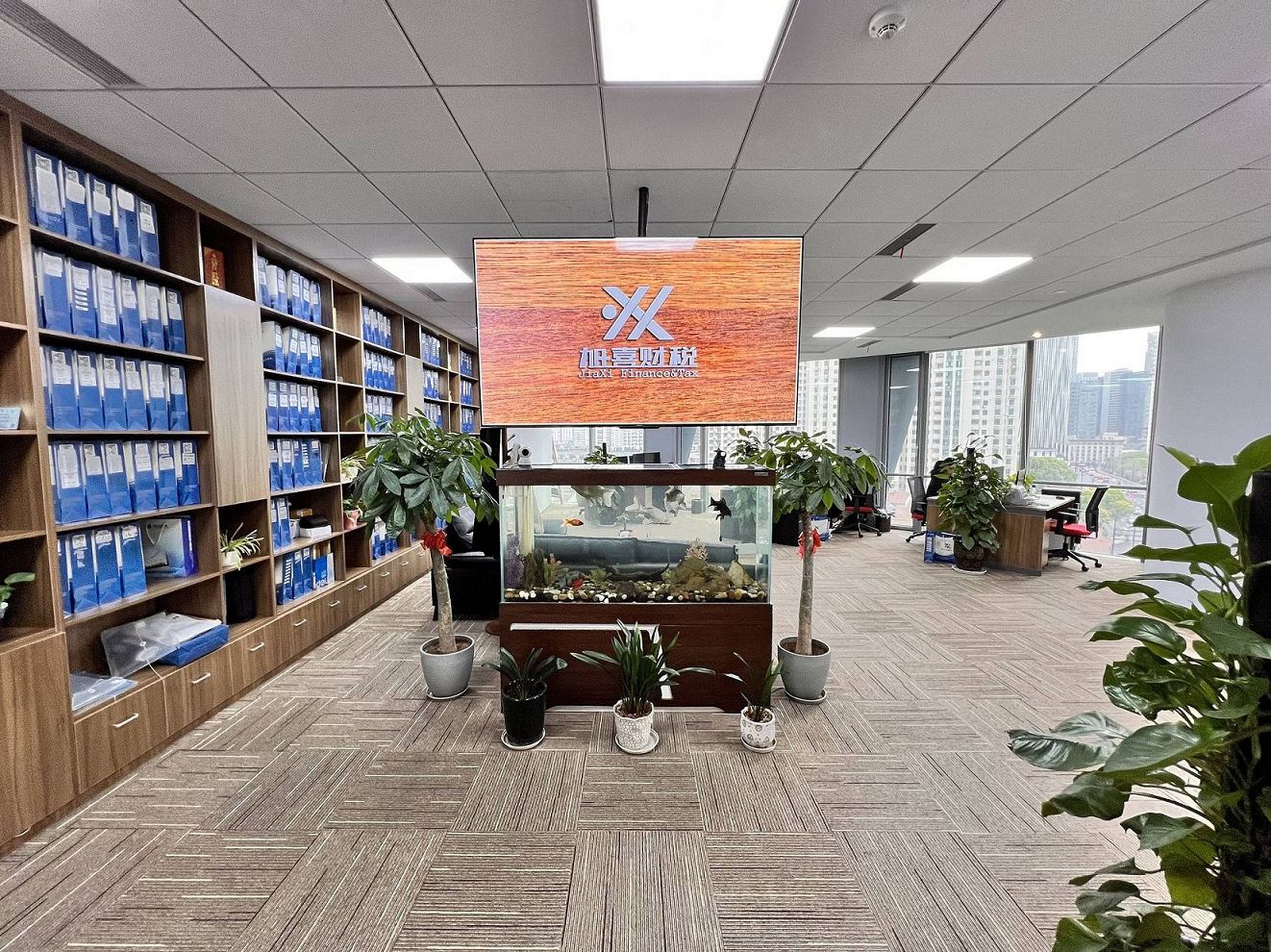
However, delegation does not mean abdication. The business owner must maintain oversight. This means providing the agent with complete, accurate, and timely documentation—all bank statements, all invoices, all contracts. A common "admin headache" we solve is the client who sends us a box of mixed receipts at the end of the quarter. The process becomes reactive, error-prone, and stressful. The solution we implement is a simple, disciplined routine: weekly digital submission of all financial documents via a secure portal. This proactive flow allows us to record transactions contemporaneously, flag potential issues early, and provide the owner with real-time financial insights. It turns the accounting function from a historical record-keeper into a forward-looking management tool.
Annual Audit and Compliance Synergy
For foreign-invested enterprises in China, an annual statutory audit conducted by a Chinese-licensed CPA firm is mandatory. The audit report, along with the annual corporate income tax reconciliation filing, is a cornerstone of your ongoing compliance. The audit process is rigorous and examines whether your financial statements present a true and fair view in accordance with CAS. The key to a smooth audit is preparation throughout the year, not a scramble in March. Your daily and monthly bookkeeping directly feeds into the audit. Well-organized accounting records, proper supporting documentation for all material transactions, and clear reconciliations for all balance sheet items (especially bank accounts, receivables, and payables) make the auditor's job easier and the process faster.
This annual exercise is more than a formality; it's a health check. It can uncover internal control weaknesses, highlight inefficient processes, and validate the company's financial position for reporting to overseas headquarters. Furthermore, a clean audit report is often required for applications like work permit renewals for executives, profit repatriation, and future capital increases. In essence, consistent, high-quality bookkeeping throughout the year is the single best preparation for the annual audit, creating a virtuous cycle of compliance and operational confidence.
Forward-Looking Insights and Strategic Integration
Looking ahead, the regulatory and technological environment for accounting in Shanghai is evolving rapidly. The "Golden Tax Phase IV" system is leveraging big data and AI to perform real-time monitoring of corporate tax-related behavior, making transparency and accuracy more critical than ever. For foreign investors, the strategic imperative is to view accounting not as a isolated compliance task, but as an integrated component of business intelligence. Properly structured books should provide clear data on product line profitability, regional sales performance, and cost driver analysis. When your China books are reliable, they empower better local decision-making and facilitate more meaningful reporting to global management.
My personal reflection after years in this field is that the companies that thrive are those that respect the system without being intimidated by it. They invest in understanding the rules, establish robust processes early, and partner with trusted advisors. This allows the leadership to focus on what they do best: growing their business in one of the world's most dynamic markets. The initial effort to build a solid financial foundation pays compounding dividends in operational smoothness, risk mitigation, and strategic agility.
Conclusion
In summary, establishing compliant and functional accounting books for a foreign-registered company in Shanghai is a multifaceted and continuous process. It begins with a firm grasp of the legal requirements and CAS, is operationalized through disciplined daily management of VAT invoices and transactions, and is validated through the annual statutory audit. Engaging a professional agent is highly advisable, but active owner oversight remains essential. The ultimate goal is to transform this mandatory compliance exercise into a strategic asset—a source of truth that drives sound business decisions. By prioritizing a robust financial infrastructure from the outset, foreign entrepreneurs in Shanghai can navigate regulatory complexities with confidence and build a platform for sustainable, scalable success.
Jiaxi Tax & Financial Consulting's Perspective: At Jiaxi, our 12-year frontline experience has crystallized a core belief: for foreign investors, accounting book establishment is the first and most critical operational infrastructure. It is the lens through which the business's health is assessed, both by the authorities and by its own management. We have moved beyond seeing it as mere ledger-keeping. We view it as a dynamic compliance framework and a data-generation engine. A well-designed chart of accounts under CAS, coupled with disciplined invoice and cash flow management, does more than satisfy the tax bureau; it creates a real-time dashboard for the business owner. Our casework consistently shows that clients who embrace this integrated approach from day one avoid the costly "compliance tax" of penalties and restatements, and gain superior visibility into their China operations. In an era of Golden Tax Phase IV and heightened data scrutiny, proactive, transparent, and accurate bookkeeping is the best risk mitigation strategy. It builds credibility with regulators and forms the unshakable foundation for all future strategic moves, from profit repatriation to additional investment. Our advice is always to start right, with the end in mind.